For those who have followed basketball, the past decade has seen a revolution in how the game is played, with a significant increase in three-point shot attempts. Daryl Morey spoke at a forum when I was an investment associate at an asset management firm, laying out the math clearly: 3 × 0.4 > 2 × 0.5. The emergence of Stephen Curry’s shooting and Morey’s analytical approach fueled a meteoric rise in three-point attempts.
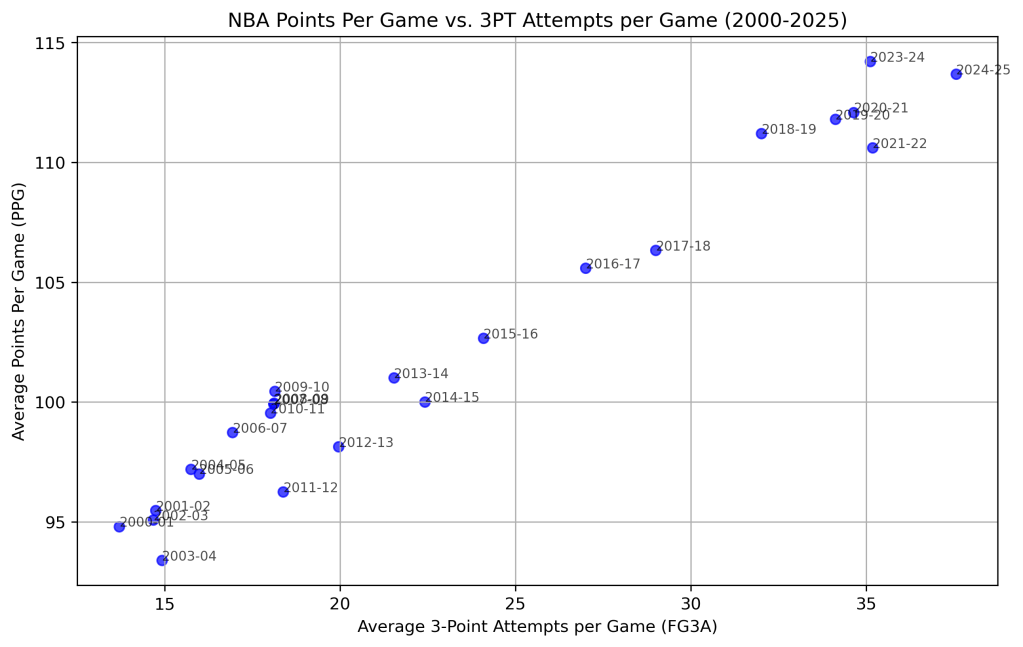
The trend above clearly shows that from around 2013 to the 2020s, teams increased their three-point attempts by approximately 15 shots per game. The data suggests that this increase began around the 2013-14 season, coinciding with Stephen Curry’s ascent as the greatest shooter of all time and James Harden’s rise to stardom in Houston. Since then, three-point attempts have steadily increased each year.
To illustrate the scale of this transformation, the Houston Rockets led the league in three-point attempts in the 2013-14 season with 26.5 attempts per game, accounting for roughly 28% of their total shots. In contrast, during the 2024-25 season, the Denver Nuggets rank last in the league in three-point attempts, yet they still attempt 31.8 threes per game, with about 35% of their shots coming from beyond the arc—five more attempts than the league leader from a decade ago!
Today, this trend has reached new heights, with the defending champion Boston Celtics attempting 48 three-pointers per game, accounting for more than 50% of their total field goal attempts—a testament to how dramatically the game has evolved.

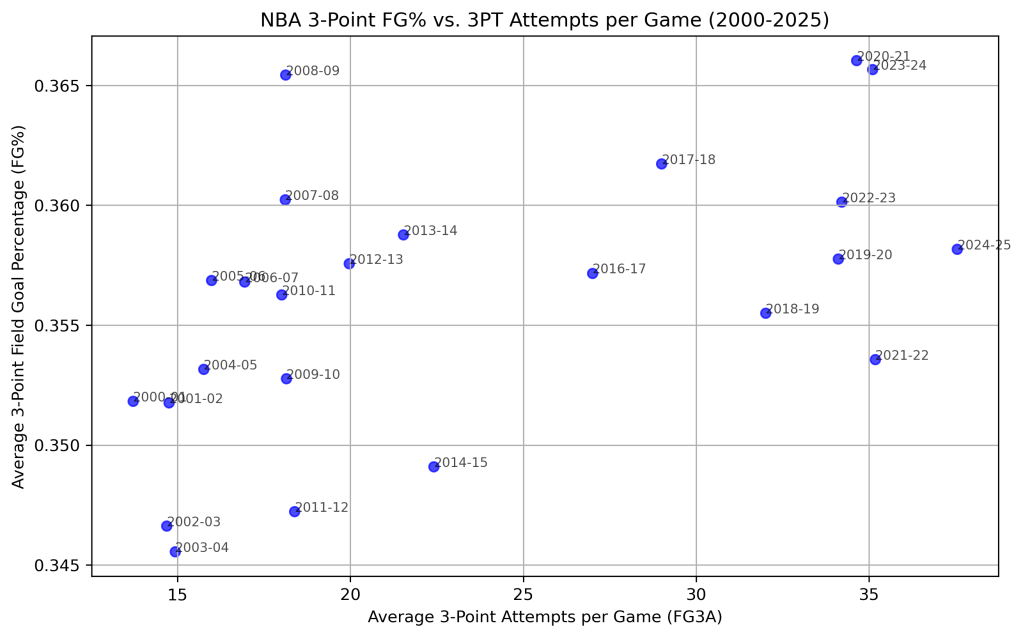
This analysis raises an important question: With the dramatic increase in three-pointers, are teams taking worse shots? There isn’t conclusive evidence to suggest so, as teams have maintained a three-point shooting percentage between 34.5% and 37.0% from 2000 to 2025. In fact, the two best shooting seasons during that span were 2020-21 and 2023-24, indicating that despite the volume increase, efficiency has remained stable—or even improved.
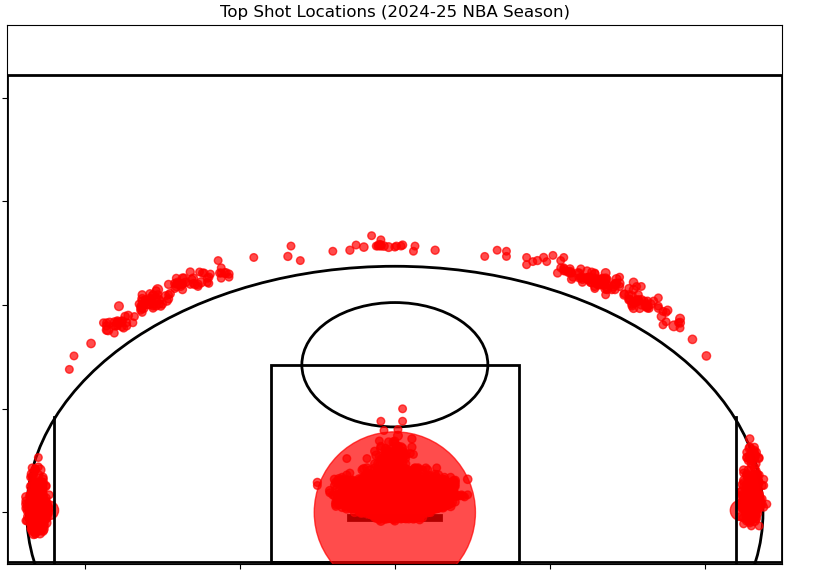
The analytics revolution has ushered in a completely different style of basketball, along with a new shot profile altogether. Today, the mid-range shot has largely been abandoned, as most attempts now come from three-point range—specifically corner threes—or at the rim, as shown in the graphic below. These shot distribution trends have been widely circulated, so they shouldn’t come as a surprise to most NBA followers.
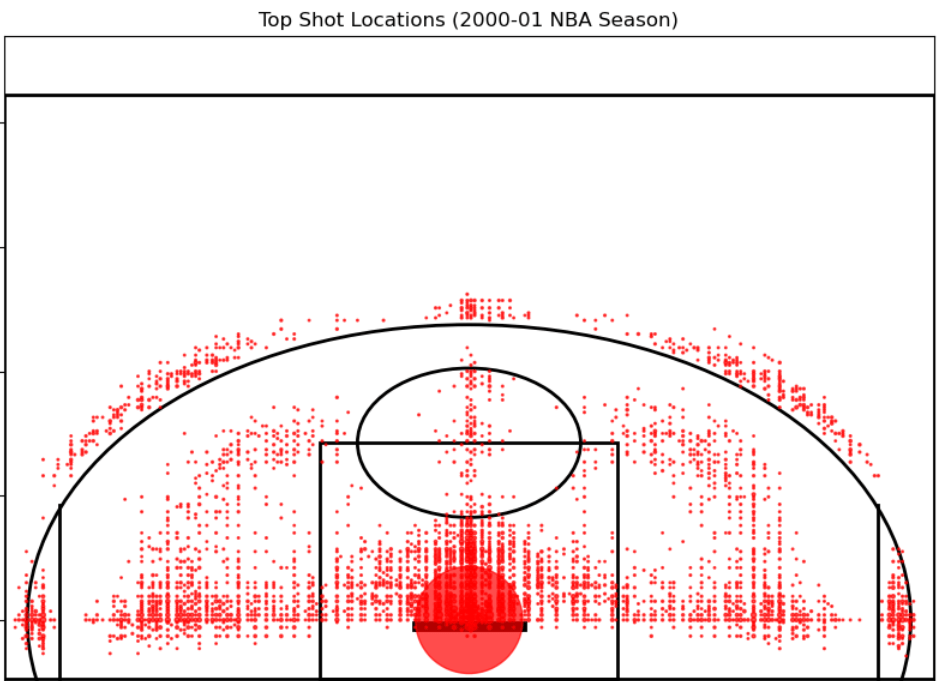
In contrast, the 2000-01 season featured a much more diverse shot selection. Teams relied on a balanced mix of shots at the rim, mid-range jumpers, and three-pointers, rather than the heavily perimeter-oriented approach seen today.
When does the trend stop?
Looking at the data, it’s clear that the game many of us grew up watching has evolved with the rise of analytics and three-point shooting. However, one must ask: how long can this trend continue? If this trajectory persists, teams may eventually take the majority of their shots from beyond the arc.
Draft prospects are already tailoring their games early on to become proficient three-point shooters, reinforcing this shift. As teams continue to prioritize shooting above all else, young players will focus more on developing their three-point shot, further accelerating this trend. The more efficient the league becomes at shooting threes, the more teams will rely on them—creating a self-reinforcing cycle.
The X-factor will be whether the league steps in if gameplay leads to a loss in revenue due to an unappealing play style. Some potential ideas include:
- Widen the floor to eliminate corner 3’s – the closest distance and most efficient 3-point shot
- Move the 3-pointer back (a variation of above)
- Implement a cap on 3-point attempts
- Make 3-pointers worth less
- Allow hand checking above the 3-point line – an idea from Ethan Strauss
- Similar to 3-in-the-key technical fouls, introduce “3-in-the-corner”. Basically this means only allowing a player to be in the corner for 3 seconds
Regardless of whether these changes are implemented, the game has always evolved. Today, the NBA features the most talented and skilled players in its history. Nonetheless, it will be interesting to see how three-pointers continue to shape the league.
*Data from stats.nba.com, charts produced using Python
 Perspectives on the NBA
Leave a comment